How to do competitor analysis for a SaaS in 2026 (the AI-assisted workflow)
65% of SaaS deals are competitive and buyers shortlist 1–3 products before they ever talk to sales. The 6-step AI-assisted competitor analysis workflow a small team can run in 1 hour a week.


The way most small SaaS teams "do competitor analysis" hasn't changed in a decade. Someone opens 10 browser tabs on a Friday, copies a few feature pages into a spreadsheet, calls it a battle card, and ships it to sales. Three months later the spreadsheet is stale, and a new competitor has launched that no one's tracking.
That workflow worked when SaaS had room. It doesn't anymore. There are now around 30,800 SaaS companies globally, with roughly 1,500 new SaaS startups launched every month (Ascendix Tech, 2025). And 65% of sales opportunities for the average software company are now competitive — head-to-head deals where the buyer is comparing you against at least one alternative (Crayon, 2024).
This guide is the AI-assisted workflow for doing competitor analysis on a SaaS in 2026 — with the actual ChatGPT and Claude prompts you'll need at each step. If you'd rather start from a fixed structure, our SEO competitor analysis template lays out the eight sections to fill in; this guide is the workflow that fills them.
Key takeaways
- 65% of SaaS deals are competitive (Crayon, 2024) and 49% of B2B buyers shortlist just 1–3 products before vendor contact (G2, 2024) — if you're not on the shortlist, you don't get a chance to win.
- The 6-step workflow: identify competitors → scrape positioning → score on 5 dimensions → build the battle card → set up monitoring → run a weekly review.
- 76% of CI teams report a YoY increase in AI adoption, and 60% now use AI daily for summarization and analysis (Crayon, 2025) — the workflow below is what AI-assisted competitor analysis actually looks like in practice.
- The whole loop runs in about an hour a week once it's set up, which matters because 56% of SMB marketers have an hour or less per day for marketing in total (Constant Contact, 2024).
Why competitor analysis broke for SaaS in 2026
The structure of a SaaS purchase is what changed first. B2B buyers now spend only 17% of their buying time with vendors and complete roughly 80% of the journey rep-free (Gartner, 2024). Most of that journey is comparison — a buyer reading your homepage, three competitors' homepages, two G2 reviews, a Reddit thread, and an AI-summarized "best X for Y" article, long before anyone fills out a demo form.
The shortlist is also shrinking. 49% of buyers now shortlist just 1–3 products, up from 33% in 2023 (G2, 2024). The window to be considered is narrower than ever, and the selection happens before you know it's happening. 31% of B2B buyers now say public review sites are their most-consulted source — up from 13% in 2021 (G2, 2024). On top of review sites, AI assistants are reshaping how buyers compose the shortlist in the first place — and you don't control any of it.
So when we say "competitor analysis," we're no longer talking about a static doc. We're talking about a system that keeps your understanding of three to seven competitors current, makes it usable by sales and marketing, and surfaces what changed each week.
Step 1: Identify your real competitors (not your aspirational ones)
The first failure mode of SaaS competitor analysis is studying the wrong companies. Most early-stage teams list the category leaders — Salesforce, HubSpot, Notion — because those are the names everyone knows. Almost none of those companies show up in your actual competitive deals.
There are three lists you actually need:
- Direct competitors — products buyers genuinely compare you against in the same evaluation. These are the ones costing you 65% of your deals.
- Indirect competitors — products that solve the same job differently. A buyer choosing "spreadsheets + a freelancer" is choosing not-you.
- Stack-replacement competitors — bundles of two to three tools your product collapses. These are who you have to beat on consolidation arguments.
The fastest way to build these lists in 2026 is a hybrid: 30 minutes of structured prompting against an AI assistant, then 30 minutes verifying against three signals — your own closed-lost notes, a G2 alternatives page, and a targeted Reddit search.
A working ChatGPT or Claude prompt for the AI half:
You are an analyst helping me build a competitor list for a SaaS company.

My product: [one-paragraph description, ICP, top 3 use cases, pricing tier]

Return three lists:
1. Direct competitors — products that solve the same job for the same ICP at a similar price tier. List 5–8.
2. Indirect competitors — products or workflows that solve the same job differently. List 3–5.
3. Stack-replacement competitors — combinations of 2–3 tools we collapse. List 2–4 combinations.

For each, include: company name, one-line positioning, primary ICP, rough price tier (free/low/mid/enterprise), and the single reason a buyer might pick them over us.

Skip category leaders unless they actually compete for my exact ICP.
The output will be 80% useful and 20% wrong — the prompt is a starting point, not the answer. Cross-check against your last 20 closed-lost notes, the "Top alternatives" tab of your G2 listing, and a Reddit search for [your category] alternatives site:reddit.com. Anyone who shows up in two of those three is a real competitor. Anyone who shows up only in the AI list isn't.
Sivon's competitor agent runs this discovery automatically against your Brand Blueprint — pulling in the SaaS landscape for your category and filtering by ICP, price tier, and geography — so the list you start with is already de-fluffed.
Step 2: Scrape positioning from each competitor's public surface
Once you have a list of five to eight real competitors, the next step is reading their public surface area — the homepage, pricing page, top three feature pages, and the first page of G2 reviews — and extracting structured positioning data. This is where AI saves the most time. Done manually, summarizing one competitor takes 45–60 minutes. With a focused prompt, it's 5–10 minutes per competitor and the output is more structured than what most marketers write by hand.
The prompt that works:
Analyze this SaaS competitor and return a structured positioning summary.

Inputs:
- Homepage: [paste full text or URL]
- Pricing page: [paste full text or URL]
- Top 3 feature/product pages: [paste]
- G2 or Capterra reviews (first page): [paste]

Return JSON with these fields:
{
  "company": "",
  "headline_promise": "the one-line claim above the fold",
  "icp": "who they're built for, in their words",
  "top_3_use_cases": [],
  "key_differentiators": [],
  "pricing_model": "freemium / per-seat / usage / tiered + price points",
  "social_proof": "named customers, customer count, key logos",
  "stated_weaknesses": "things they don't claim to do, or that reviewers complain about",
  "tone_and_voice": "1 sentence describing how they sound"
}

Be specific. Quote their actual phrases for headline_promise and icp.
Run that prompt for each competitor and you'll have eight structured cards in 60–80 minutes — work that used to take a full day. The trick: treat the model as a summarization tool, not a research tool. If you give it the source material, the output is reliable. If you ask it to "research" the company cold, you'll get hallucinated headlines from old marketing copy.
Sivon's competitor agent does this scrape-and-structure step automatically — it pulls each competitor's homepage, pricing, and key feature pages into the same JSON schema above, so all eight cards are populated for you on a single screen. The point isn't that the agent is faster (it is). The point is the schema stays consistent across competitors, which is the precondition for the next step.
Step 3: Score each competitor on 5 dimensions
A list of positioning summaries isn't a competitor analysis yet. To make decisions from it, you need a comparable score across a small number of dimensions. Five is the right number — fewer hides nuance, more turns the exercise into a research project that never ships.
The five dimensions that work for almost every SaaS:
- Positioning sharpness — how clear and differentiated their headline promise is (1–5).
- Product depth — depth of feature coverage in the core job-to-be-done (1–5).
- Pricing pressure — how aggressive their pricing is relative to value, on your ICP (1–5, where 5 = high pressure on you).
- Distribution strength — share of voice on review sites, organic search, and AI assistant recommendations (1–5).
- Customer momentum — recent funding, named logos, hiring signals, review velocity (1–5).
Score each competitor 1–5, with a one-sentence justification per cell. The scoring is intentionally subjective — the goal isn't a calibrated benchmark, it's a forced ranking that surfaces which competitor is winning where, and where you actually have an advantage worth claiming.

The most useful artifact from scoring isn't the absolute number per competitor — it's the shape of the radar. A competitor with a 5 on positioning, a 3 on product, and a 5 on distribution is a marketing problem; you can build past them. A competitor with a 5 on product, a 3 on positioning, and a 2 on distribution is who you should be most worried about, because they're one good marketing hire away from running you over.
An AI prompt for this step:
Given the structured positioning data for these [N] competitors, score each
on the 5 dimensions below from 1–5, with a one-sentence justification per
cell. Return as a markdown table.

Dimensions:
1. Positioning sharpness
2. Product depth (in the [your category] job)
3. Pricing pressure on a [your ICP, e.g. 6-person SMB] buyer
4. Distribution strength (review sites, SEO, AI assistant presence)
5. Customer momentum (recent funding, logos, hiring, review velocity)

After the table, identify the single competitor who scores highest overall
and the single competitor whose shape (high in 1–2 dimensions, low in 3+) is
most likely to disrupt the category in the next 6 months.
Sivon's competitor agent runs this scoring automatically against the structured positioning data from Step 2, and re-scores it weekly so you can see when a competitor's shape changes — for example, when a Series A round shows up under Customer Momentum or when their pricing pressure score jumps.
Step 4: Build a battle card sales actually uses
The output of steps 1–3 — a competitor list, positioning data, scored table — is what most teams think is the deliverable. It isn't. The deliverable is a battle card per competitor that someone in sales can actually act on. 79% of CI teams arm sales with battle cards, but only 26% say reps use them as much as they'd like (Crayon, 2024). Authoring the card isn't the problem. Making one that gets opened mid-call is.
A useful battle card has six sections:
- The 30-second pitch against this competitor — three sentences a rep can say verbatim.
- Where we win — three concrete wedges, with one customer story or stat each.
- Where they win — two real strengths. Not zero. If you don't acknowledge it, the rep sounds dishonest.
- Landmines to plant in discovery — three questions that surface gaps in the competitor's offering.
- Pricing comparison — a side-by-side at the ICP's actual usage tier, not list price.
- One-line objection responses — the three most common "but [competitor] does X" objections, with the response.
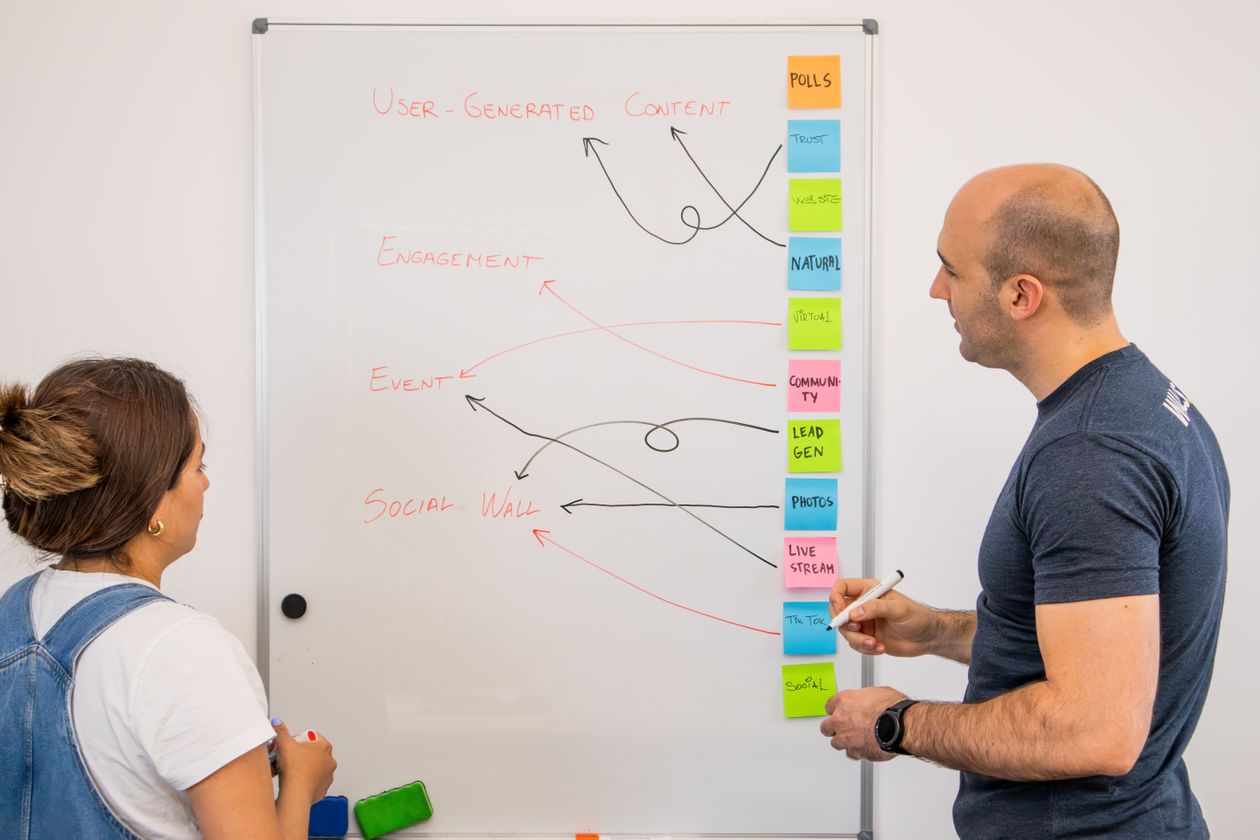
The single biggest lever on whether sales actually uses the battle card is length. Anything over one page gets archived. The best ones we've seen — the ones reps quote on calls — fit on a single screen, and they're written in the rep's voice, not marketing's. If you want to go deeper into the structure, see our battle card template — it's the long-form pillar piece on this, with the exact format we use.
Sivon's competitor agent generates battle cards in this exact six-section structure, populated from the scoring data and your Brand Blueprint, so the "where we win" lines are written from your actual product reality — not generic feature claims that read as marketing fluff to a rep.
Step 5: Set up monitoring so you don't fall behind
The most expensive mistake in SaaS competitor analysis is treating it as a one-time project. Pricing pages get rewritten. New features ship. Funding rounds drop. A static battle card written in March is wrong by June — and the cost of that wrongness is the deal you lose because a rep is selling against last quarter's competitor.
A small team can't watch eight competitors in real time. What it can do is set up cheap monitoring across a few channels and review the signal weekly. The right monitoring stack in 2026 is small:
- Homepage and pricing page changes — a free tool like Visualping or Wachete watching the URL.
- G2 / Capterra review velocity — set a Google Alert on
"[competitor name] G2 reviews"and the review URL. - Funding and hiring signals — Crunchbase newsletter for funding, LinkedIn alerts on key roles.
- AI assistant presence — once a month, ask ChatGPT and Perplexity "best [your category] for [your ICP]" and screenshot the answers.
- Reddit and X mentions — F5Bot or a Reddit search alert on
competitor name.
Five inputs. Fifteen minutes of setup per competitor. The time cost lives in step 6, not the monitoring itself. For teams that want to consolidate this into one place, our comparison of competitive intelligence tools for small businesses walks through what's worth paying for at $0, $50, and $500 a month.
Sivon's competitor agent watches all of these signal sources continuously, normalizes them into one feed, and surfaces only the changes that matter against your scored dimensions — so a competitor adding a new pricing tier triggers an alert, but a routine homepage copy edit doesn't.
Step 6: Run a 30-minute weekly review
The whole point of the previous five steps was to make Step 6 fast and decision-oriented. The weekly review is what turns competitor analysis from a project into a system.
A working 30-minute weekly review has four parts:
- 5 minutes — scan the monitoring feed. What changed across all eight competitors this week?
- 10 minutes — pick one signal to act on. Updated pricing, new feature, fresh round, new review batch. One.
- 10 minutes — update the affected battle card. Just the section that's now wrong. Not the whole card.
- 5 minutes — push the update. Slack message to sales with a one-line "this changed, here's the new line." That's the whole communication.
Two reasons this cadence works. First, picking one thing per week is the discipline that keeps you acting on signal, not noise. Second, a weekly one-line update is something a rep will actually read — a quarterly "competitor refresh deck" is something they'll archive.
The broader trend is hard to ignore. 76% of CI teams report a YoY increase in AI adoption, and 60% now use AI daily for summarization and analysis (Crayon, 2025). Teams that don't run an AI-assisted competitive workflow in 2026 aren't falling behind in some abstract future. They're already behind, this quarter, in the deals they're losing.
Frequently asked questions
How often should a SaaS update its competitor analysis in 2026?
Continuously, on monitoring; weekly, on the battle card; quarterly, on the full positioning summary. Pricing pages and new features change too fast for a quarterly cadence to be enough. 76% of CI teams report a YoY increase in AI adoption (Crayon, 2025), largely because AI makes weekly refresh feasible.
How many competitors should you track at once?
Five to eight. Three is too few to spot patterns; ten or more becomes unmaintainable on a small team. 49% of B2B buyers shortlist just 1–3 products (G2, 2024), so the real question is whether you're one of the three for your ICP — not whether you're tracking every adjacent player.
Can ChatGPT or Claude do competitor analysis on its own?
Not reliably as a research tool — model training data is stale and competitor positioning shifts monthly. AI works well as a summarization layer on top of source material you provide (homepage, pricing, reviews). 74% of US marketers already use AI in their role (HubSpot, 2025), but the ones getting clean output are feeding it source content, not asking it to "research" a company cold.
What's the difference between competitive intelligence and competitor analysis?
Competitor analysis is the artifact — the battle card, the scoring matrix, the positioning summary. Competitive intelligence is the system that keeps it current — monitoring, weekly review, sales enablement. Most small teams have a one-time analysis but no intelligence loop, which is why only 26% of CI leaders say reps use battle cards as much as they'd like (Crayon, 2024).
Is it worth paying for a competitive intelligence platform like Klue or Crayon as a small team?
Usually not under $5M ARR. The budget breakeven is around the point where you have a dedicated CI or PMM hire — below that, the AI-assisted workflow above plus free monitoring tools covers 80% of the value at zero seat cost. Once you cross into a real CI function, our comparison of CI tools for small businesses walks through what's worth the spend.
So what now?
Competitor analysis in 2026 hasn't gotten harder — the cost of doing it badly has gone up. With 65% of SaaS deals competitive, only 1–3 products on the average shortlist, and 80% of the buying journey happening before a rep is involved, "we'll get to it next quarter" is no longer a viable plan.
The 6-step workflow above is the version a small team can actually run — one hour a week, three AI prompts, five free monitoring tools, one battle card per competitor that sales will actually open. It's not a $40K/year CI program. It doesn't need to be.
If you'd rather not wire it up by hand, Sivon's competitor agent runs the whole loop — discovery, scrape, score, battle card, monitoring, weekly digest — against your Brand Blueprint, so the output is grounded in your actual product, ICP, and voice instead of generic frameworks. Either way, the system matters more than the tool. Build it once, and the next time sales asks "how do we beat [competitor]?" — you'll already have the answer in front of you, refreshed last Friday.